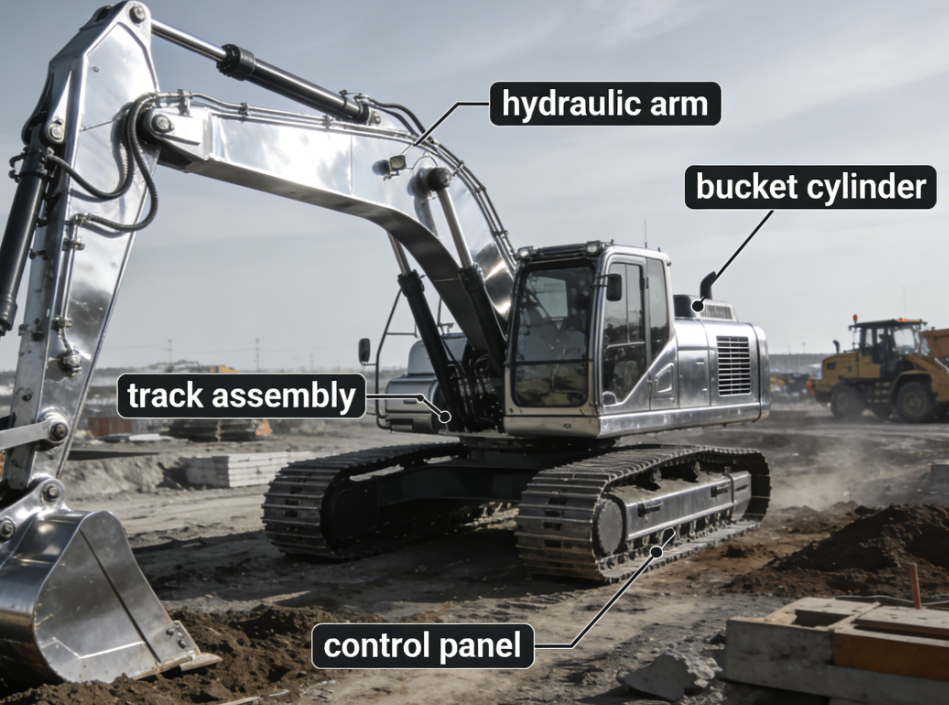
Hydraulic excavators are the cornerstone of modern construction, mining, and infrastructure projects, renowned for their versatility, power, and precision. Their defining feature—a robust hydraulic system that drives the boom, arm, and bucket—enables them to perform tasks ranging from heavy earthmoving to delicate material handling with exceptional efficiency.
Modern hydraulic excavators integrate cutting-edge technologies to maximize performance and operator comfort. Advanced load-sensing hydraulic systems deliver power precisely where it is needed, reducing fuel consumption by up to 20% compared to traditional setups. Intelligent control systems, paired with telematics platforms, provide real-time data on fuel usage, maintenance needs, and operational efficiency, allowing fleet managers to optimize productivity and minimize downtime. Operator cabs feature ergonomic seating, intuitive joystick controls, and 360-degree visibility, reducing fatigue and enhancing safety during long shifts.
These machines excel in diverse scenarios:
Construction: Excavating foundations, trenching for utilities, and demolishing structures.
Mining: Removing overburden, loading ore, and maintaining haul roads.
Infrastructure: Digging trenches for pipelines, constructing retaining walls, and clearing land for highways.
Material Handling: Using specialized grapples and clamps to move logs, scrap metal, and other bulk materials.
When selecting a hydraulic excavator, key factors such as operating weight, bucket capacity, digging depth, and fuel efficiency must be carefully matched to the specific application. For example, compact excavators are ideal for urban construction sites with limited space, while large mining excavators are designed for maximum productivity in open-pit operations.